

GRANSO:Your Professional Dies Manufacturer!
Since its founding in 2010, Granso's first factory has grown into one of China's largest metal component manufacturers. Granso specializes in producing components for switchgear ranging from 7.2kV to 40.5kV, such as interlocks, circuit breakers, load switches, earthing switches, vacuum circuit breakers, and insulation. Through partnerships with renowned brands such as CHNT, DELIXI, and HUAWEI, Granso's annual output value has reached US$60 million.
-
![Metal Stamping Dies]() Metal Stamping DiesMetal stamping dies are specialized, high-precision tools used in stamping presses to cut, form, bend, or shape sheet metal into specific parts. They act like custom-made molds that define the...view more
Metal Stamping DiesMetal stamping dies are specialized, high-precision tools used in stamping presses to cut, form, bend, or shape sheet metal into specific parts. They act like custom-made molds that define the...view more

Why Choose Us
Our Factory
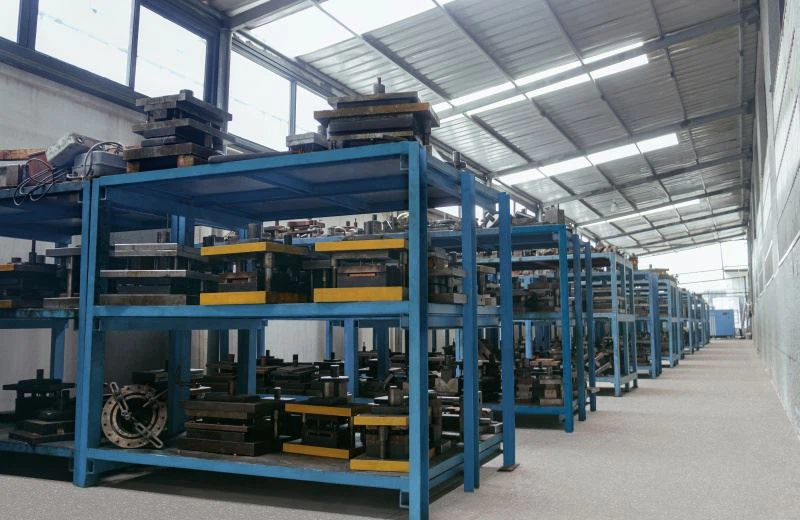
Owning three factories with 23000+ square meters together, Granso now has over 200+ staff, 25+ technicians. The self-production rate of parts in our company is as high as over 90%.
Quality Control
We rigorously control every process, ensuring our products comply with relevant standards such as GB7251.1, GBT/23359, and JB/T9661.
One-Stop Service
In the pre-sales stage, our team of experts will recommend the most suitable products according to the needs of customers and provide detailed technical consultation.
During the sales period, we ensure timely delivery and provide installation guidance.
For after-sales, we provide long-term technical support, warranty services and spare parts to help customers maximize the use of products and get reliable maintenance during use.
Advantages of Metal Dies
High Production Efficiency
Metal die making, through processes like die casting and metal stamping, is known for its high production efficiency. Die casting, for instance, enables the rapid production of parts with fast cycle times, often just a few seconds per part. This efficiency is particularly advantageous in industries requiring large quantities of identical parts, such as automotive and consumer electronics.
Economical Manufacturing Process
The economical nature of metal die making is another significant advantage. Once the initial setup and tooling are completed, the cost per part decreases substantially with increased production volumes. This is due to the ability to produce high volumes of parts with minimal material waste and reduced labor costs. Additionally, the efficiency of the process minimizes the need for post-production machining, further reducing overall manufacturing costs.
Fine Crystalline Structure
The rapid cooling of molten metal in die casting results in a fine crystalline structure, which enhances the strength and durability of the product. This refined grain structure is crucial for applications requiring high mechanical performance and reliability.
Excellent Mechanical Features
Metal die making processes produce parts with excellent mechanical features, including high strength, durability, and resistance to wear and tear. High-pressure injection in die casting ensures complete mold filling, resulting in uniform properties and minimal internal defects. This leads to components that can withstand significant mechanical stresses, making them suitable for demanding applications in the automotive and aerospace industries.
Cost-Effective for Mass Production
One of the most compelling advantages of metal die making is its cost-effectiveness for mass production. The high initial investment in tooling and setup is quickly offset by the low cost per part in large-scale production runs. This makes metal die making particularly advantageous for industries that require large quantities of high-quality, identical parts.
Superior Dimensional Accuracy and Surface Finish
Both die casting and metal stamping offer exceptional dimensional accuracy and surface finish. The high-pressure injection of molten metal into the mold ensures that the cast part closely replicates the mold’s design, minimizing the need for post-production machining. This precision is critical for industries where tight tolerances and high-quality surface finishes are essential, such as in the production of intricate automotive and aerospace components.
High Repeatability and Consistency
Metal die making processes ensure high repeatability and consistency across production runs. The robust molds and dies used in these processes can withstand extreme pressures and temperatures, allowing for the production of tens or hundreds of thousands of parts with consistent quality.
Material Versatility
Metal die making allows for the creation of complex parts with intricate geometries and supports a wide range of materials, such as aluminum, magnesium, and zinc, making it a versatile and efficient option. This versatility allows manufacturers to select the best material for their specific needs.
Applications of Dies
Automotive Industry
Dies create everything from interior car body panels and battery insulators to transmission gaskets. The automotive sector depends on cutting and forming dies to produce safe and reliable vehicles that meet strict standards.
Packaging Industry
Packaging products like boxes, labels, and custom containers are made using cutting and forming dies. These dies allow manufacturers to produce products quickly. Ultimately keeping per piece cost low to match consumer expectations.
Consumer Goods
The list of consumer products that require a die in their manufacturing has no end. Everything from your shoes to cell phones and tools to home appliances rely on dies for shaping and cutting components.
Types of Dies
Line dies use a die block together with a stripper plate that attaches to the metal sheet, and the punch penetrates a hole and takes away the blanks. Each station that cuts or forms the metal represents a simple die or a single-operation die. Line dies can use one or more stations. The process itself may be categorized according to its cutting and forming capabilities. Most cutting dies operate in blanking, notching and trimming jobs. Forming dies are widely used in curling and bending tasks.
A compound die handles many operations at the same time, making the project more efficient and faster. This is the type of punch and die used in general cutting applications.
In terms of handling multiple operations, a progressive die utilizes separate workstations in several stages to execute a certain task. It uses a stock strip to carry the item from one station to the other. A progressive die’s multi-station design and high-speed work boosts efficiency for manufacturing projects such as aerospace washers, automotive parts, and electrical components to name a few.
Another type of sheet metal stamping that excels in design and productivity is the combination die. It is comparable to compound dies, handling simultaneous operations at the same time, which results in faster delivery and more reliable results. Its multi-operation power makes it a suitable choice for various cutting and shaping applications. These include manufacturing parts for mining equipment, electronics and appliances.
The Die Making Process: From Design to Manufacturing
Design Phase
The die making process starts with a detailed design phase, using advanced Computer-Aided Design (CAD) systems. With CAD software, particularly 3-D solid modeling, designers can visualize and interpret the die design, ensuring high-quality standards are met.
Process Engineering vs. Die Engineering
Process engineering outlines the manufacturing steps for the part, whereas die engineering concentrates on creating the tool to perform these steps. This distinction ensures both the manufacturing process and the die are optimized for efficiency and precision.
Material Selection
Material selection is a crucial step following the design phase. The choice of material depends on factors such as the part material, part shape, calculated tonnage, and annual output. Common materials used in die making include tool steel, carbide, and various alloys, each offering distinct properties like durability, hardness, and the ability to maintain precise dimensions under extreme conditions.
Machining
Once materials are selected, the machining process begins. This step uses precision equipment such as CNC machines, lathes, and grinders to shape the material into its final form. The machining process typically starts with rough machining, followed by heat treatment if necessary, and then finished machining to achieve tight tolerances.
Precision Machining Techniques
Various techniques may be employed during the machining process, including:
Wire Electrical Discharge Machining (EDM): For intricate cuts and shapes.
Jig Grinding: For achieving high precision and fine finishes.
Polishing and Surface Grinding: To ensure smooth surfaces and tight tolerances.
Hard Milling: For machining hardened materials with precision.
Assembly
After machining, the individual components of the die are carefully assembled to create the complete die. This stage requires meticulous attention to detail to ensure that all parts fit together perfectly and function correctly.
Component Assembly
The assembly involves mounting the components to the die sets in their respective locations. Additional processes such as grinding, drilling, tapping, lapping, polishing, stoning, and reaming may be necessary for certain die sections to achieve the desired fit and finish.
Testing and Quality Control
After assembly, the die is rigorously tested to ensure it meets all specifications and quality standards. This includes a “dry run” to identify any interference issues between the forming and cutting components. Finally, the die is mounted in a press for the fitting process.
Packing and Shipping
|
Packing |
Carton/ Wooden Case / Pallet |
|
Shipping |
Express, Air Freight, Sea Freight, LCL/FCL |
FAQ
We're professional dies manufacturers and suppliers in China, specialized in providing high quality custom service. We warmly welcome you to buy dies at competitive price from our factory.
dies, Metal Stamping Dies


